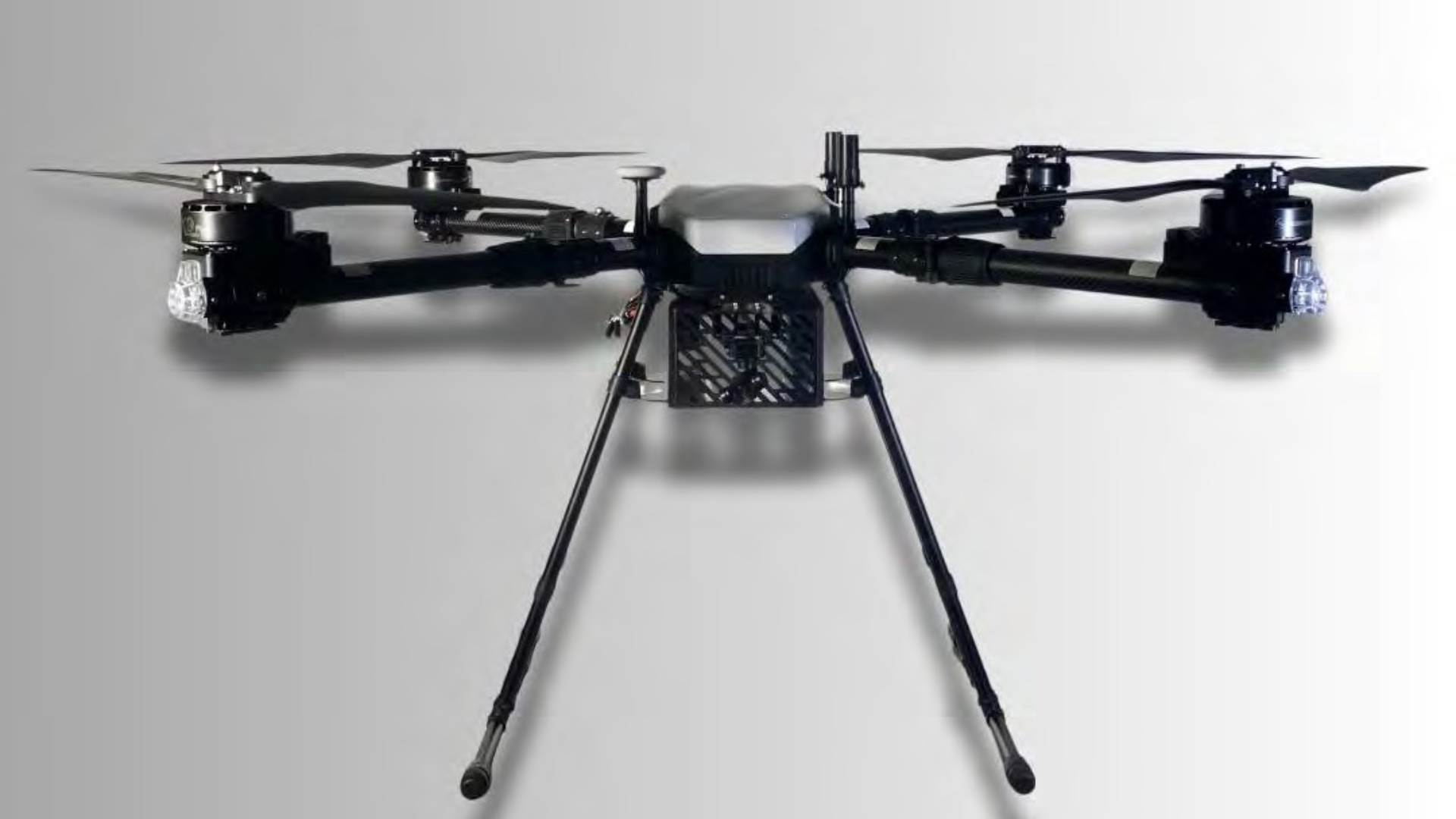
Legalair designed and delivered the full market-entry process for a French drone façade-cleaning operator moving into Spain: from regulatory engineering before AESA, the Spanish Aviation Safety Agency, to the brand it went to market with. The company is now flying in Spanish airspace.
Some projects look like paperwork and turn out to be projects. When a French drone façade-cleaning operator asked us to bring his business into Spain, the brief sounded simple: we have the drone, we have the French licence, we want to work in Spain. The file ended up exposing a drone that was not where it should have been, a weight that did not match the manufacturer's own website, and an insurance policy that covered none of what everyone assumed it covered. Today the company operates in Spain with its file recognised by AESA. This is how an intention became a business that invoices.
A deceptively straightforward starting point
The client arrived with his credentials in order: operator registration with the French DGAC, an operational declaration under European standard scenario STS-01 valid until 2028, certified practical training, and two aircraft — a high-pressure spraying drone for façades and roofs, and a light multirotor for visual inspections. On paper, a European operator with everything already done.
Legalair's first job was not to file anything. It was to read. Drone regulation has been common across the Union since Implementing Regulation (EU) 2019/947, but every Member State adds its own layer. In Spain, Royal Decree 517/2024 governs compulsory insurance, UAS geographical zones, urban environments and coordination with every other authority involved. And there is one development that has reshaped the Spanish market and that much of the industry still has not absorbed: the Spanish national standard scenarios, which allowed flying over built-up areas with drones carrying no class marking, stopped accepting new declarations in August 2024 and expired at the end of 2025. From 2026 onwards, Spain only recognises the European scenarios, which require a drone with a C5 or C6 class marking, or else a full operational authorisation supported by a risk assessment. For an operator holding a class-marked aircraft, that is a competitive advantage. For most of the sector, it is a wall.
The finding: the licence covered the wrong drone
The document review produced the first surprise. The statement of situation issued by the DGAC carries an annex listing the aircraft declared under each scenario. Opening it revealed that the client's STS-01 declaration covered only his previous, smaller drone. The aircraft he intended to fly in Spain, bought months later, was duly entered in the French aircraft register, but nobody had ever added it to the operational declaration.
These are two different procedures, and they are confused constantly: registering a drone is registering it; declaring it under a standard scenario is what authorises you to operate it under that scenario. Had the file been submitted as it stood, Spain would have recognised a declaration that did not cover the drone about to fly. The outcome would have been a company operating with the appearance of legality, holding a policy whose insurer would have had every argument to decline a claim. Catching it meant one extra filing in France and a few days of delay. Not catching it would have cost considerably more.
The short route: recognition instead of starting over
The second decision was strategic. The instinctive response to entering another country is to file everything again from scratch. Legalair took the route set out in Article 13(3) of Regulation 2019/947: an operator who has already declared a standard scenario in its State of registration may ask the authority of the destination country to recognise that declaration rather than submit a new one. The saving is not marginal. It avoids drafting and validating an operations manual from zero, it allows work to begin in Spain while the Spanish company is still being incorporated, and it keeps a single coherent file across both countries.
Executing it meant navigating a path that AESA's electronic office does not make easy for a non-resident: user registration without a Spanish digital certificate, electronic identification through the route reserved for foreign nationals, validation of an operator registered in another Member State with a qualified electronic signature, appointment of an authorised representative in Spain so that day-to-day filings would not depend on the owner's availability, and finally the request for recognition of the European declaration. Each of those steps has its own screen, its own precondition, and its own way of silently blocking if the previous one is not closed.
A drone that did not exist in Spain
Registering the aircraft in AESA's system produced the third obstacle: the model was not in the Spanish database. The large manufacturers are all there; a specialist European builder is not necessarily. Legalair prepared and filed the model registration application with the full technical specification, the manufacturer's user manual, the EU Declaration of Conformity for class C5 and photographic documentation, and saw it through until the aircraft was added to the Spanish register. One useful side effect: any other Spanish operator buying that model will now find it already listed.
The 24.9 kilo detail
The fourth finding came from reading the manufacturer's manual line by line. The commercial datasheet advertised ten kilos, and that figure had been taken for granted in every earlier conversation. But those ten kilos were the payload: actual maximum take-off mass is 24.9 kilos. The difference is anything but cosmetic, because the twenty-kilo threshold changes the compulsory insurance regime entirely. Below it, Spanish Royal Decree 37/2001 sets the minimum cover. Above it, Regulation (EC) 785/2004 applies, with a materially higher floor.
The same analysis exposed the real insurance problem. The operator held a professional liability policy covering his cleaning, moss-removal and chemical treatment work. What almost nobody reads is the paragraph in which the insurer itself warns that the contract does not cover damage caused by the drone, because that belongs to a separate aviation liability policy. Put plainly: if the pressurised water damages the façade, the existing policy pays; if the drone falls onto the pavement, nobody pays. Legalair defined the cover architecture the business actually needed — two complementary policies, the limits enforceable in Spain, and hull cover on an aircraft worth more than twenty thousand euros.
From the file to the street
A flawless regulatory file does not invoice. The second half of Legalair's work was building the company as a business: the legal form and incorporation route for the Spanish entity, the activity classification, the occupational health and safety obligations that apply to a cleaning company, the handling of biocidal and water-repellent products and their run-off, and the data protection position on imagery captured over inhabited buildings.
Alongside that came the brand. Legalair developed the identity the company now trades under in Spain, from naming and visual system to the corporate website, built around the argument that actually moves a property manager: cleaning a façade with no scaffolding, without occupying the street for weeks, and without putting anyone on a rope at height. On that foundation we built the B2B sales effort, aimed at property managers, residential communities and industrial units, with a service dossier and a standard quotation, plus a content strategy in which the work itself is the best advertising: footage of a drone cleaning an eight-storey façade explains the service better than any brochure.